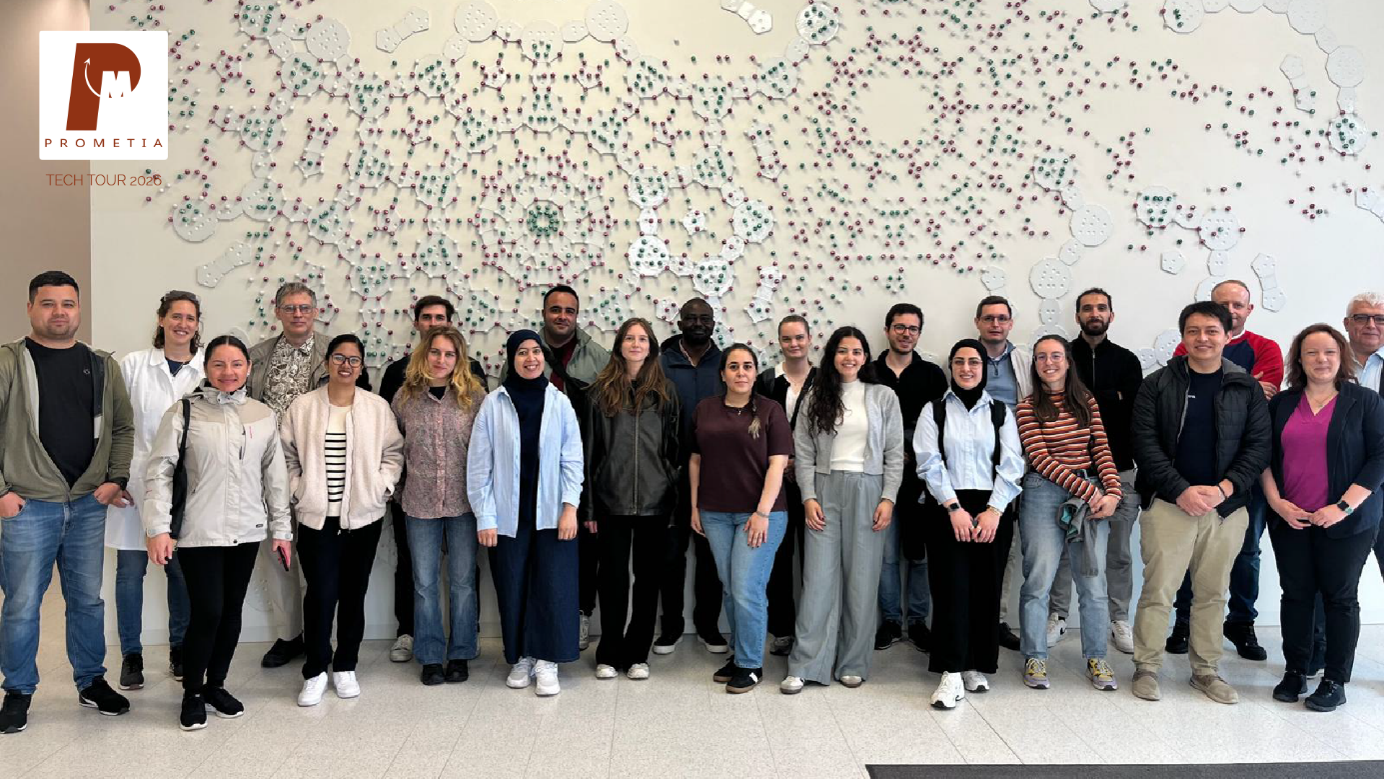
From 15 to 19 June 2026, PROMETIA brought together 22 participants, PhD candidates, young researchers, young engineers and mentors from across its member network, for the annual Tech Tour. Jointly organised with TU Bergakademie Freiberg (TUBAF) and the Helmholtz Institute Freiberg for Resource Technology (HIF/HZDR), this year’s edition took the group on a journey through the full value chain of mineral processing and extractive metallurgy, from historic underground mines to cutting-edge research labs and active industrial recycling facilities.
Arriving in the City of Mining
Participants arrived on Monday 15 June and gathered for a first dinner in Freiberg, a city whose identity has been shaped by the mining industry. It was the perfect setting to begin a week devoted to the science and industry of critical raw materials.
Day 2: Inside the World’s Oldest Mining University and the Helmholtz Institute
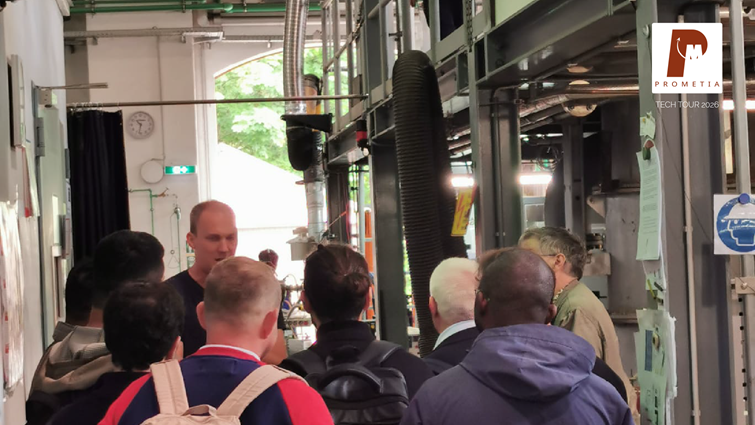
Tuesday opened at TUBAF, founded in 1765 and the oldest mining university in the world. Following a research presentation by Prof. Sabrina Hedrich, participants toured the university’s tech halls and laboratories covering hydrometallurgy, pyrometallurgy, and mineral processing.
The afternoon moved to the Helmholtz Institute Freiberg for Resource Technology (HIF/HZDR), hosted by Jens Gutzmer and Sandra Birtel, where participants received a presentation and guided institute tour. The day then culminated in a scientific mini seminar, with four presentations and pitches by young researchers from TUBAF and HIF.
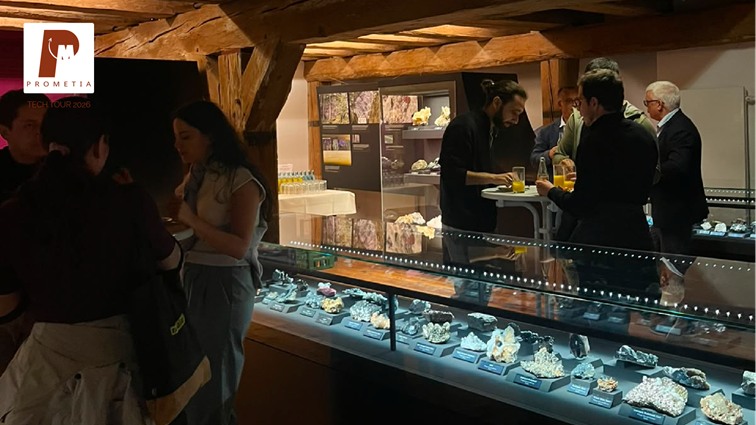
The evening brought a welcome change of scenery: a guided tour of Terra Mineralia’s extraordinary mineral collection, housed inside Freudenstein Castle, followed by a networking dinner with young scientists from the two institutions.
Day 3: Underground, Environmental Engineering, and Zinc Recycling
Wednesday morning took participants underground at the Silver Mine Freiberg – Reiche Zeche, a research and teaching mine associated with TUBAF. Exploring active underground workings gave the group a visceral sense of what mineral extraction looks like at the source.
After lunch, the group travelled to GEOS in Halsbrücke for a company visit and presentation, an insight into the environmental and geotechnical engineering work that follows mining activities.
The day closed at BEFESA Zinc Freiberg GmbH, where participants witnessed the recovery of zinc from steel-mill dust through industrial-scale pyrometallurgical processing — a compelling real-world demonstration of secondary raw material recovery and circular metallurgy.
“The visit to the Freiberg Reiche Zeche silver mine was one of the most memorable moments of the Tech Tour, as it was my first time visiting a mine and I found the research carried out there particularly interesting. The bioleaching approach, involving the direct injection of leaching solutions into mine walls and mineral rocks, was a very impressive example of applied research. I was also very impressed by the BEFESA Zinc Recycling site, especially as a chemical engineer, because seeing processes at such an industrial scale and with such complex design was highly inspiring.“
Karen Nassif, PhD student at IFP ENERGIES NOUVELLES
Day 4: Into the Erzgebirge: Lithium, History and the Pinge
Thursday took the group into the Erzgebirge mountains for a day rooted in geological heritage and the raw materials of the future.
An early start brought participants to the Zinnwald Mine – Besucherbergwerk Zinnwald for a guided geological tour of the visitor mine (Tiefer-Bünau-Stollen). The site has a long history of tin and tungsten extraction, and is now recognised as a significant European lithium deposit — making it a particularly relevant stop for a group working at the intersection of critical materials and the energy transition.
After lunch at the Museum Altenberg, a guided tour explored the history of mineral processing across centuries of local mining activity. The day ended with a stop at the iconic ‘Pinge’ viewpoint, a vast crater formed by the collapse of centuries-old underground workings.
“The visit to the Zinnwald mine was especially valuable for me because they are planning to start lithium mining there in the near future. Since my PhD research focuses on lithium, it was very interesting and directly relevant to learn more about their plans and mining approach.“
Lien Lemmens, PhD student in Chemistry at KU Leuven
Key Takeaways
Beyond the sites visited and the knowledge exchanged, the 2026 Tech Tour reinforced several important messages that run through PROMETIA’s work:
Multidisciplinary approaches are essential to foster innovation in critical raw materials. A holistic view of the value chain, combining primary and secondary resources, is crucial to ensuring a sustainable and economically viable supply of materials. And Europe’s long-standing expertise in mining, mineral processing, and extractive metallurgy continues to be underpinned by a strong scientific ecosystem. Scientific and innovative breakthroughs are key assets in the global race for access to sustainable critical raw materials.
PROMETIA extends its sincere thanks to Prof. Sabrina Hedrich (TUBAF) and Dr. Sandra Birtel (HIF/HZDR) for their exceptional hosting, and to mentors Patrick d’Hugues (BRGM) and Mark Foreman (Chalmers University of Technology) for their guidance throughout the week.
Interested in being part of the PROMETIA network?
The Tech Tour is one of the many activities PROMETIA organises for its members. If your organisation works in mineral processing, extractive metallurgy, mining or recycling and you’d like to get involved, find out more at prometia.eu/become-a-member.ers
Subscribe to our newsletter to stay up to date with all of PROMETIA’s activities and latest news!